Intro
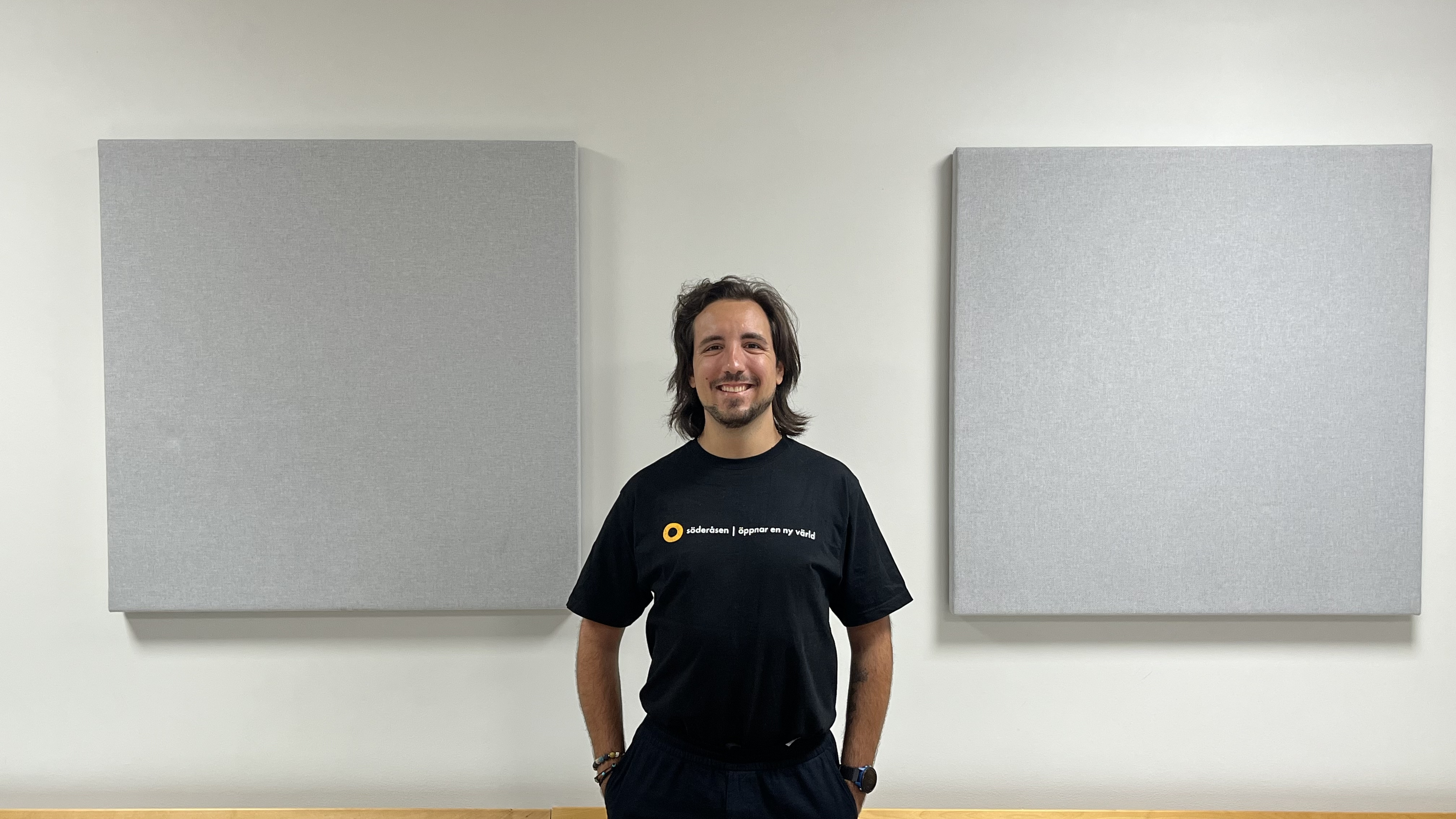
My name is Marcell Fekete, and I am a PhD fellow in Computational Linguistics at Aalborg University (Copenhagen), supervised by Prof. Johannes Bjerva. My research interests include multilinguality and the cognitive plausibility of language modelling.
⚠ Warning! Linguistics rant incoming! ⚠
Language is probably our most human skill. With it, we can convey ideas with unique precision. Yet, language is much more than just a mere communicative device. We can use it to present affection or dislike. We show or hide our identities, adapting to our context and our interlocutors. It is a vehicle for self-expression, and of art: of poetry, prose, drama, films and music. It shapes culture and it is shaped by culture. We learn it from our parents, our guardians.
However, in recent years, for the first time ever, we encountered something that seemed to wield language as its truly fluent user: language models. Language models learn language in truly different ways to how we humans do it, without truly contextualising in culture and the real world.
Research
Marcell Fekete · Johannes Bjerva · Tamás Káldi
Vision-language models (VLMs) are increasingly evaluated for whether they identify the right visual content, but little is known about whether they express such content in a discourse-appropriate form. We address this research gap using information structure (IS), testing whether VLMs distinguish discourse-old Topics from discourse-new Foci in visually grounded question answering. We exploit Hungarian, a language in which Topic and Focus map onto dedicated syntactic positions, making IS choices observable in text. Comparing six VLMs with human participants, we find that models produce IS-relevant constructions, but over-regularise this sensitivity. Under the interacting pressures of discourse status, grammatical role (preference for subject Topics) and definiteness (preference for indefinite Foci), humans choose variable strategies for IS realisation. VLMs, by contrast, collapse onto narrow response templates, resembling mode collapse (Kirk et al., 2024). Our findings suggest that VLM evaluation should look beyond content accuracy to how content is packaged for the discourse.…
Read more
Marcell Fekete · Nathaniel Romney Robinson · Ernests Lavrinovics · Djeride Jean-Baptiste · Raj Dabre · Johannes Bjerva · Heather Lent
Cross-lingual transfer from related high-resource languages is a well-established strategy to enhance low-resource language technologies. Prior work has shown that adapters show promise for, e.g., improving low-resource machine translation (MT). In this work, we investigate an adapter souping method combined with cross-attention fine-tuning of a pre-trained MT model to leverage language transfer for three low-resource Creole languages, which exhibit relatedness to different language groups across distinct linguistic dimensions. Our approach improves performance substantially over baselines. However, we find that linguistic relatedness—or even a lack thereof—does not covary meaningfully with adapter performance. Surprisingly, our cross-attention fine-tuning approach appears equally effective with randomly initialized adapters, implying that the benefit of adapters in this setting lies in parameter regularization, and not in meaningful information transfer. We provide analysis supporting this regularization hypothesis. Our findings underscore the reality that neural language processing involves many success factors, and that not all neural methods leverage linguistic knowledge in intuitive ways.…
Read more
Marcell Fekete · Johannes Bjerva
Understanding how linguistic knowledge is encoded in language models is crucial for improving their generalisation capabilities. In this paper, we investigate the processing of morphosyntactic phenomena, by leveraging a recently proposed method for probing language models via Shapley Head Values (SHVs). Using the English language BLiMP dataset, we test our approach on two widely used models, BERT and RoBERTa, and compare how linguistic constructions such as anaphor agreement and filler-gap dependencies are handled. Through quantitative pruning and qualitative clustering analysis, we demonstrate that attention heads responsible for processing related linguistic phenomena cluster together. Our results show that SHV-based attributions reveal distinct patterns across both models, providing insights into how language models organize and process linguistic information. These findings support the hypothesis that language models learn subnetworks corresponding to linguistic theory, with potential implications for cross-linguistic model analysis and interpretability in Natural Language Processing (NLP).…
Read more
Words
My CV
↓ Download PDF
EXPERIENCE▾
PhD Fellow • Aalborg University (Department of Computer Science, Copenhagen)
Sep 2022 – Present
PhD funded by the Carlsberg Foundation project Multilingual Modelling for Resource-Poor Languages, supervised by Prof. Johannes Bjerva and Heather Lent. Also supervising bachelor and master students in Software Design.
Junior Machine Learning Engineer • TAUS
Sep 2021 – Jun 2022
Research projects on Dimensionality Reduction of Multilingual Sentence Embeddings Using Autoencoders and Cross-lingual Transfer of Multilingual Language Models Using Stacked Language Adapters.
NLP Intern • Underlined
Mar 2021 – Sep 2021
Research into automatic topic modelling using Latent Dirichlet Allocation.
EDUCATION▾
MA Human Language Technology • Vrije Universiteit Amsterdam
2020 – 2022
cum laude
BA Linguistics • University of Cambridge
2015 – 2018
Upper Second-Class degree
GRANTS▾
DFF International Postdoc Grant (€287,000)
Nov 2026 – Oct 2028
Personal grant awarded by the Independent Research Fund Denmark (Danmarks Frie Forskningsfond).
Otto Mønsteds Fonden Conference Participation (€1,000)
Sep 2025
OM Fonden funding for conference attendance at ACL in Vienna, Austria.
Otto Mønsteds Fonden Conference Participation (€1,000)
Jun 2025
OM Fonden funding for conference attendance at NAACL in Albuquerque, New Mexico.
UniDive COST Action Research Visit (€2,000)
Feb – Apr 2025
UniDive funded research visit to the HUN-REN Hungarian Research Centre for Linguistics.
Otto Mønsteds Fonden Research Stay (€1,800)
Mar – Jun 2024
OM Fonden funded research visit to the University of Edinburgh.
DISSEMINATION▾
Neural Networks (Workshop)
Aug 2025
Introducing high school students to the basic principles of neural networks in Diósjenő, Hungary.
Analysing Language Model Knowledge using Linguistic Theory (Invited Talk)
Feb 2025
Talk at the Department of Computer Science, University of Göttingen, invited by Prof. Dr. Lisa Beinborn.
Do Language Models Dream With Linguistics? (Presentation)
Dec 2024
Presentation at the AAU NLP Symposium 2024.
Machine Intelligence (Lecture)
Nov 2024
Guest lecture about large language modelling for P5 Software Design at Aalborg University.
Chatbots (Lecture)
Nov 2024
Introducing high school students to shortcomings of chatbots at FalconNXT.
Chatbots and Large Language Models (Workshop)
Aug 2024
Activity for high school students regarding chatbots and the inner workings of large language models in Diósjenő, Hungary.
Language Modelling (Lab)
Nov 2023
Guest lecture and lab about large language modelling for P5 Software Design at Aalborg University.
 ACL Anthology